

I just returned from the BRAIN Initiative meeting in Washington, D.C., and I would describe the mood as febrile. We have better atlases, tools and models to understand the human brain, as we’ve been able to ride the wave of advances in artificial intelligence. However, we’re also dealing with a series of shocks: AI rapidly advancing in scientific domains, funding oscillating, new organizational structures being proposed. As we close one decadal cycle of big data neuroscience, it’s a good time to ask what’s next.
But do these 10-year prognostication exercises ever work? What can we do to make them better? A great place to start is to look back at The Future of the Brain, a collection of essays published in November 2014. This coincides with the start of the “big data” era of neuroscience. Indeed, many of the essays were written by the planners and performers of these projects. As the authors themselves admit, the book is “not a foolproof crystal ball; […] it’s more like a time capsule”.
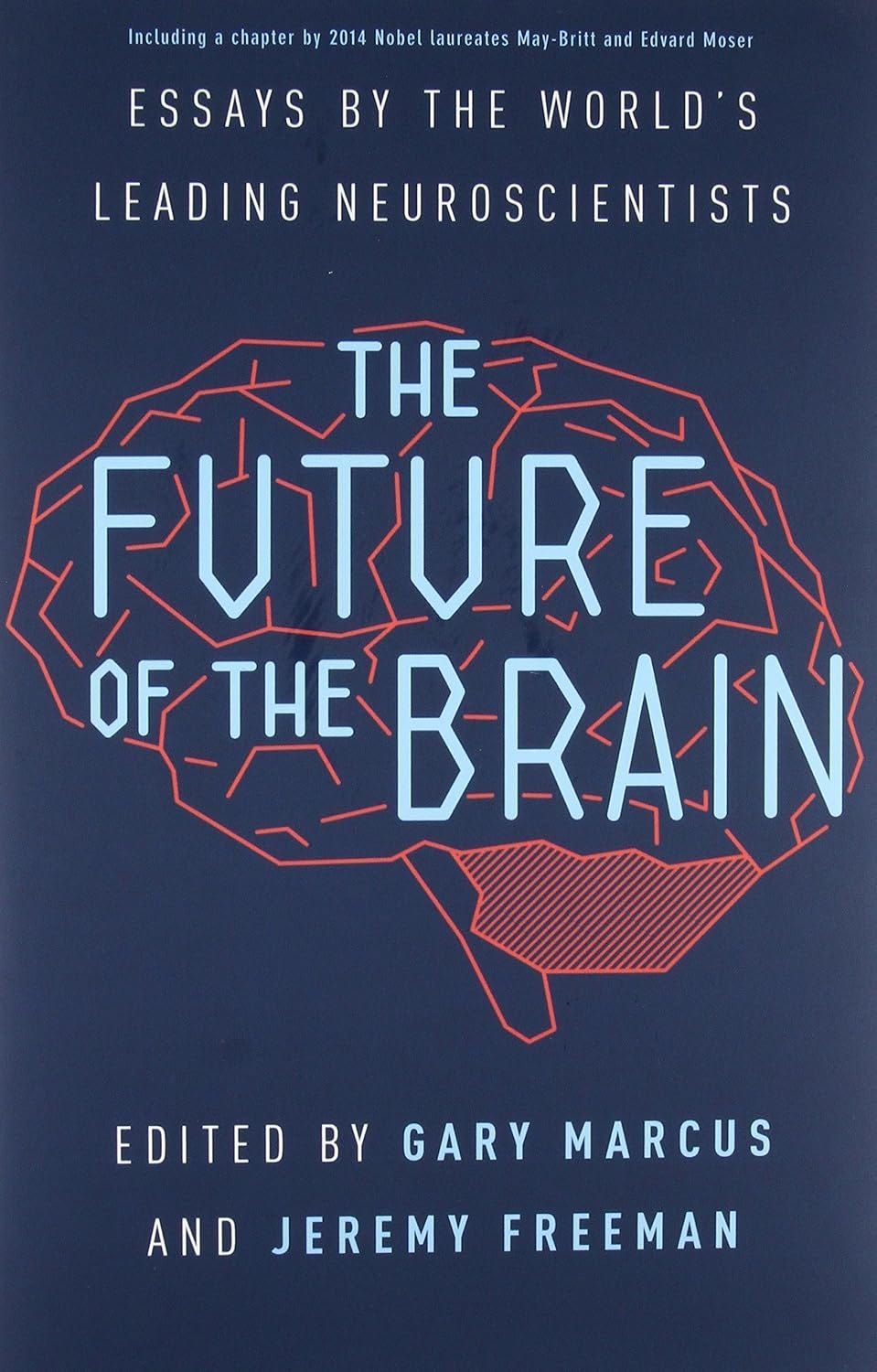
Indeed, they encourage the readers to read the book a decade hence to reassess its claims. Well, it’s been a baker’s decade, so let’s see how big neuroscience fared. I’ll come back to a few themes throughout this review:
The best way to predict the future is to invent it1
Governance and clarity of vision matter, and they can be visible early on
Tool-driven neuroscience has delivered by pointing out that a desirable capability is valuable, even if the proposed method to do so doesn’t pan out
Translational neuroscience continues to be hard
Our analysis tools are not dissimilar to what they used to be, with one conspicuous exception
We are very bad at predicting exponential technology
Let’s get started!
The best way to predict the future is to invent it
So let’s take a moment to remember 2014. Obama was in his second term and had just launched the BRAIN Initiative to build high-throughput tools for neuroscience. On the other side of the Atlantic, the Blue Brain Project had expanded into the Human Brain Project, an effort to simulate the brain at multiple scales. Institutions built in the 2000s, like the Allen Institute in Seattle and HHMI Janelia in Virginia, were starting to hit their stride and promised to make team science the standard.
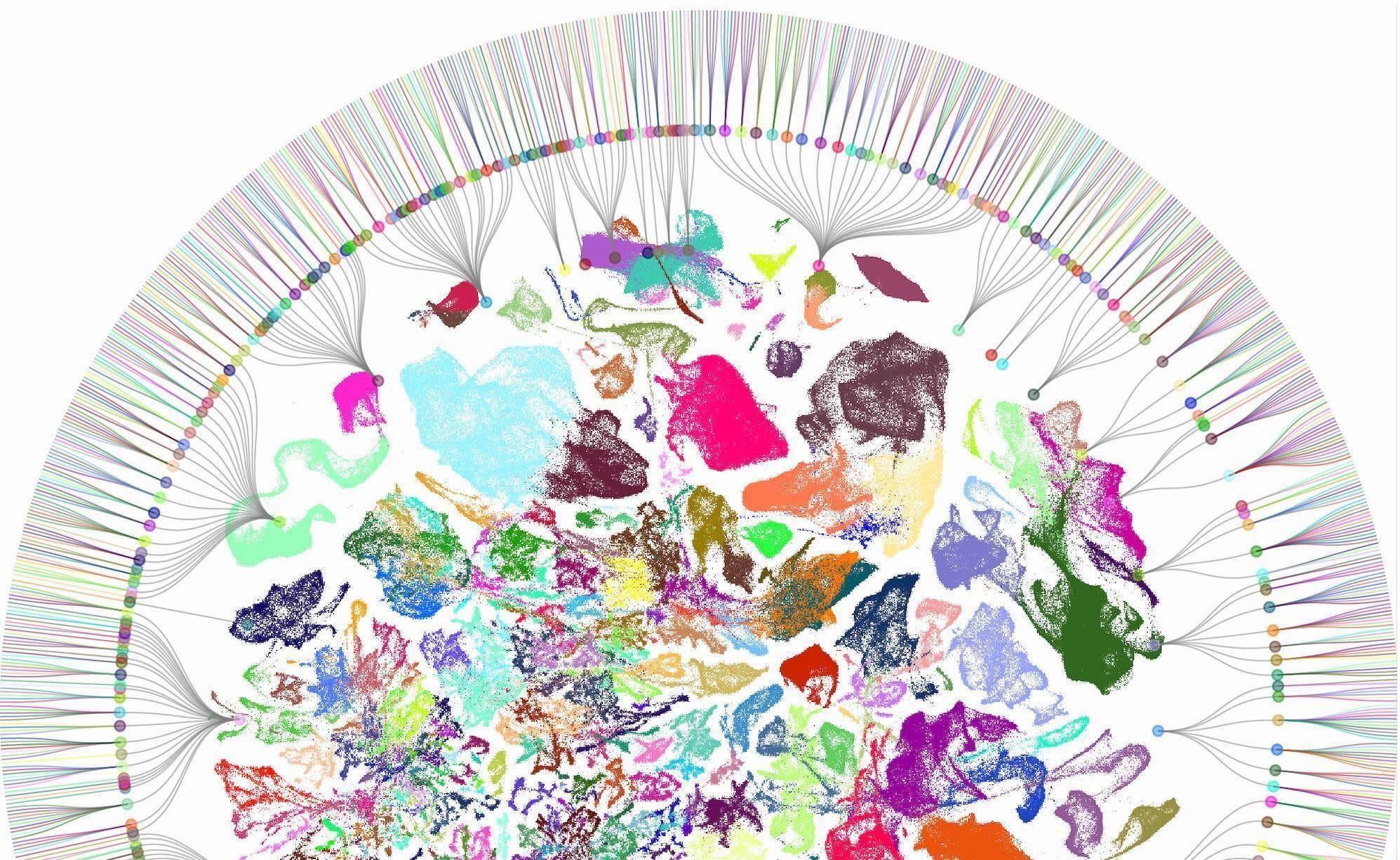
The book heavily skews towards this trend of big data neuroscience, and is written by some of the people who would most define that era. Two of the chapters describe roadmaps for many of the efforts at building atlases at the Allen Institute. The brain is complex and heterogeneous; to make progress on understanding it, we must first exhaustively catalogue its contents, its anatomy and its connections.
The chapters thus describe their efforts at mapping the myriad ways in which neurons differ from each other at the level of genes, shape and electrical properties; how connected different brain areas and different cell types are; and how neurons respond in sensory areas as myriad stimuli are presented. The efforts described have delivered; you can find the datasets they proposed on the Allen Institute website, freely available.
In fact, Christof Koch, the Allen Institute’s Chief Scientific Officer at the time, takes something of a victory lap in the afterword, which is whimsically cast as something told to him and Gary Marcus, one of the book’s editors, by a time traveller from 2064 called Lem. The time traveller described it thus:
The next major revolution was not technological, but organizational. A private American initiative, the Allen Institute for Brain Science, taking cues from the biotechnology industry, was the first to approach neuroscience as “Big Science,” moving from a model oriented around autonomous “star” investigators toward a team-based approach in which several hundred scientists from molecular biology, anatomy, physiology, genomics, optics, physics, and informatics worked together on industrial-scale projects, the first several of which had been launched by 2014.
Hence the quip, the best way to predict the future is to invent it: a detailed roadmap with a budget and an organization behind it can, generally, achieve its goals, and deliver, especially on decades-long timelines.
Governance and clarity of vision matter, and can be visible early on
Another mega-project described in the book is the Human Brain Project, which did not fare so well. At its inception, the billion-euro, 10-year project was building in silico neuroscience, most prominently large-scale simulations of rodent and human brains. While the book gives Sean Hill the space to present the project in its best light, it is clear in the afterword that Koch and Marcus are skeptical at best. The time traveller describes the predicted backlash to the project thus: “As those initial simulations proved to be computationally underpowered and inaccurate, this promise backfired, leading to the withdrawal of public support for some time in the 2020s”.
In reality, the backlash came much earlier, and Markram was removed from leadership of the project in 2015, reorienting it in part towards a more circumscribed goal of building neuroinformatics infrastructure. Its early mismanagement was the subject of countless open letters, editorials and an excellent documentary. The modest advances shown in the end product were well-captured in the eLife reviewer assessment of a recent paper from the collaboration: “results [are] solid, [but] they could have likely been obtained using a much smaller portion of the model”.
The writing had been on the wall early on. The unwieldy pan-European consortium of 100-plus institutions created enough friction that it needed a single leader with a clear, bold and realizable vision. Markram overpromised; in 2009, he told the TED audience that should the predecessor Blue Brain project succeed, he would send a hologram of a whole-brain emulation in front of the TED audience 10 years hence.
But beyond that, it is the project’s purely computational bent that was a miss. Matteo Carandini, in a different chapter of the book, puts it thusly: “Putting all the subcellular details (most of which we don’t even know) in a simulation of a vast circuit is not likely to shed light on the underlying computations.” Many of the tools to measure these subcellular details simply did not exist at the time, and the collaboration never intended to measure them. Indeed, upstream data collection tools proved far more successful in that decade.
Tool-driven neuroscience has delivered by pointing out the endpoint, even when the path was different
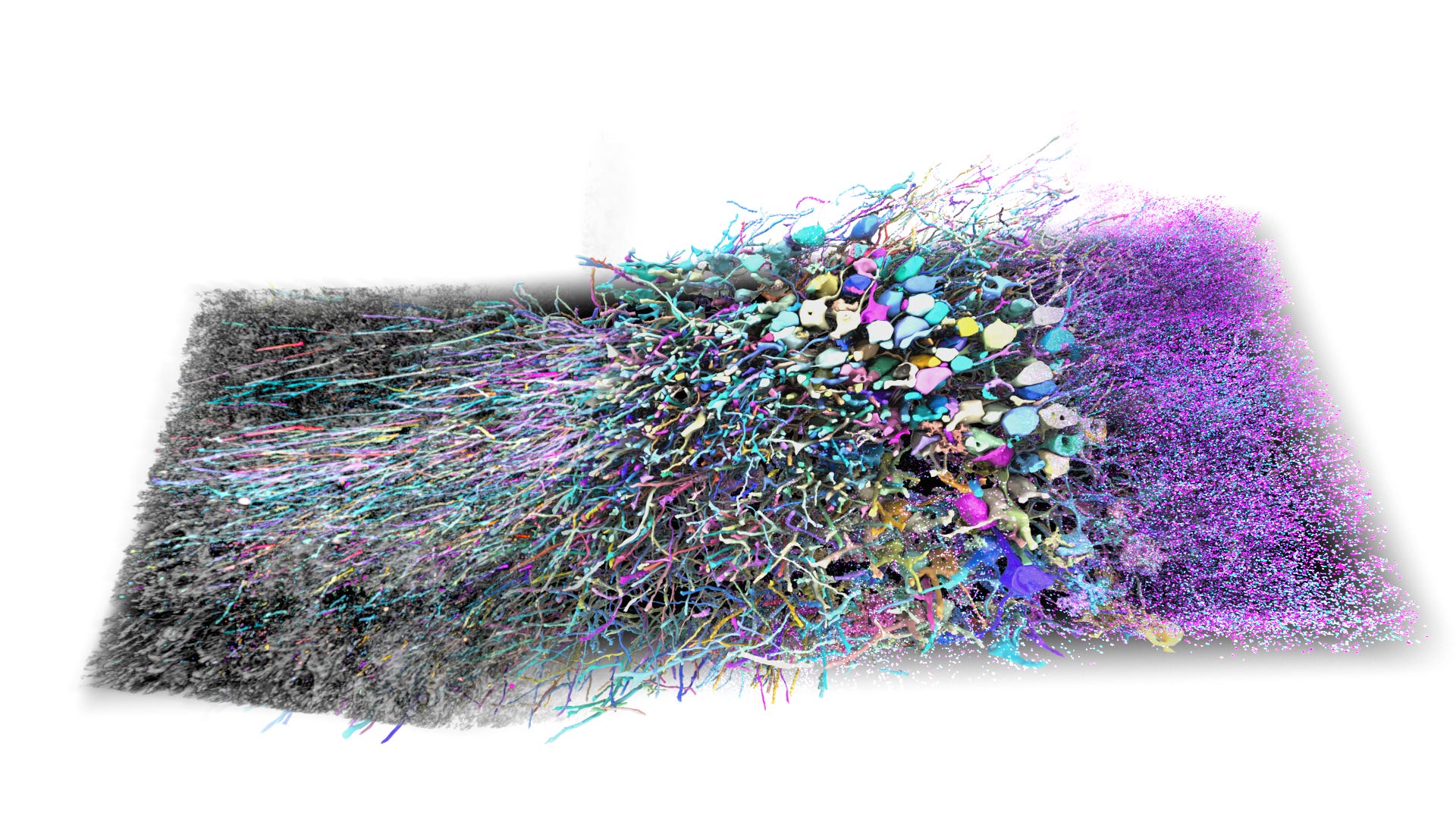
Perhaps the most interesting chapters in the book described research paths that were neither fully realized nor failed outright, but rather correctly pointed out that a certain capability would be transformative, even if the exact path to get there proved winding. In a sense, it is a sign of high ambition. The chapter that most closely resembles science-fiction is the one from George Church, with Adam Marblestone and Reza Kalhor.
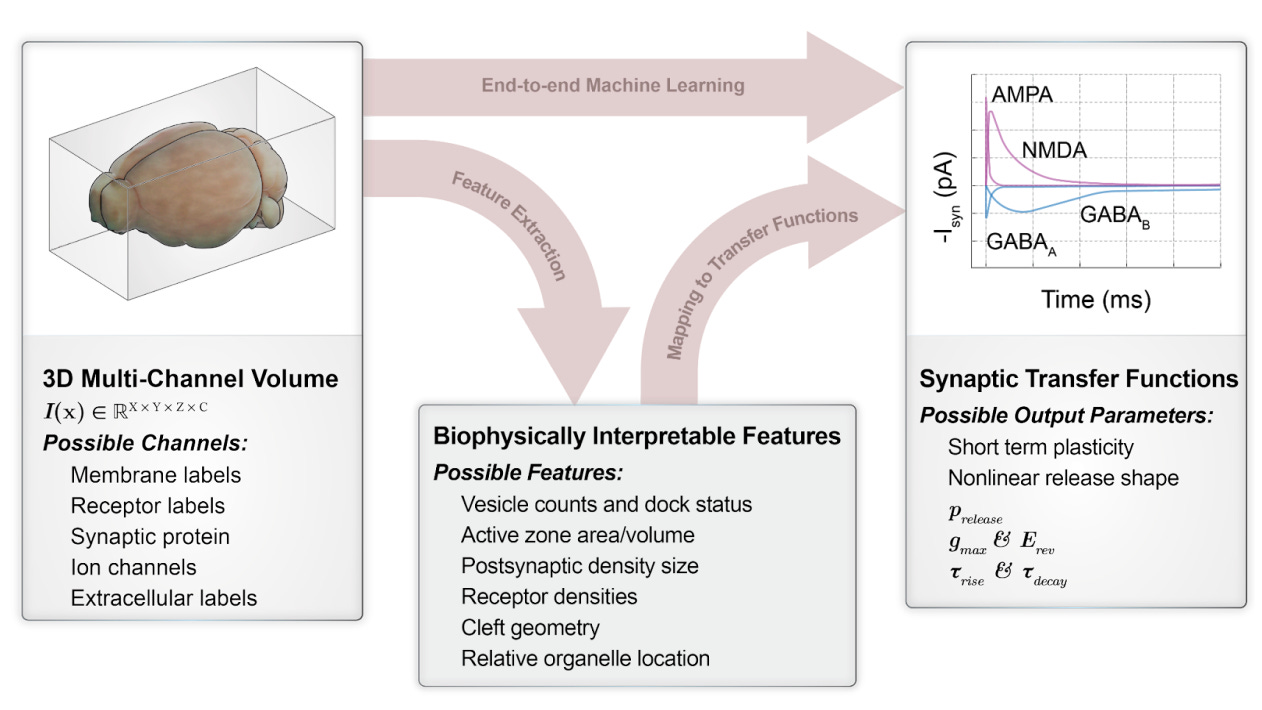
They present a radical concept for fully capturing a brain’s structure, including the shape of neurons, their connections, their gene expression patterns, and the location of proteins, as well as the history of neurons’ electrical activity. Think of it, metaphorically, as a brain preserved in amber together with its history. At that point in 2014, the closest we had gotten to a whole-brain capture was fully mapping the morphology of neurons and their connections in C. elegans and in parts of the retina; the fly connectome would wait another decade. These efforts took neural tissue, stained it with heavy metals, sliced it impossibly thin, then imaged the slices at ~10 nanometer resolution using electron microscopy (EM). Then came the painstaking work of tracing neurons and their axons through these gigantic black-and-white image volumes, first by hand, then aided with computer vision.
The vision presented in this chapter is far more radical: engineer neurons to be more easily traceable by giving them a unique DNA barcode expressed throughout the cells; make them record the history of their electrical activity in DNA in a molecular ticker tape concept; replace electron microscopy with light microscopy; and image not just a single channel, but multiple proteins, as well as gene expression with in situ sequencing.
That’s a pretty bold vision! It’s important to understand how far out some of these capabilities were at the time. Even some of the enabling technologies did not yet exist. For example, light microscopy is simply too low-resolution to image axons and synapses; yet light microscopy is required for the plan to work, because EM is not compatible with gene sequencing or protein mapping. The solution would be revealed in 2015, with expansion microscopy, in which tissue is physically expanded using a hydrogel: same light, bigger tissue, and therefore higher effective resolution. Expansion microscopy-based connectomics were first demonstrated end-to-end in 2025, with LICONN going the structure-only route and PRISM leveraging barcodes. We’re only now fully appreciating how to put all of this data together to build a simulation, with the clearest expression in our 2026 ultrastructure compiler paper.
Out of all the proposed subcomponents, the ticker tape proved the most difficult. A recent protein-assembly recorder, for example, demonstrated a resolution of roughly 15 minutes or so for NF-κB dynamics; one would need seconds-resolution for neural activity. But if the journey described turned out to be treacherous in some stretches, highlighting the destination allowed people to relentlessly pursue it.
A handful of proposals have only very recently come to fruition. Tony Zador’s proposal of casting connectomics as a sequencing problem is one example: sparse sequencing-based mapping approaches (e.g. barseq, mapseq and their derivatives) have been adopted in practice. However, the bulk sequencing of synaptic complexes proposed in the chapter—having pre-and-post neurons express barcodes that meet and lock at synapses, then put the neurons in a blender and bulk sequence the barcodes to figure out the probability that a neuron type pair connect to each other—was only recently demonstrated in connectome-seq.
In some cases, the technical difficulties proved insurmountable. Neural dust, reviewed in a chapter by Michel Maharbiz, turned out to be quite difficult to power and therefore to miniaturize the surface below 1 mm^2, and the applications have thus been limited to the control of urinary incontinence. However, the capability it pointed to, high-bandwidth invasive recordings, was the right one to push for. We now have far higher bandwidth access to human brains than the Utah arrays popularized by BrainGate at the time, thanks to implants from commercial ventures like Neuralink and Paradromics, as well as high-coverage methods like functional ultrasound imaging.
Overall though, the tools-based interventions proposed in the book have held up remarkably well, if not the exact path towards them.
Translational neuroscience continues to be hard
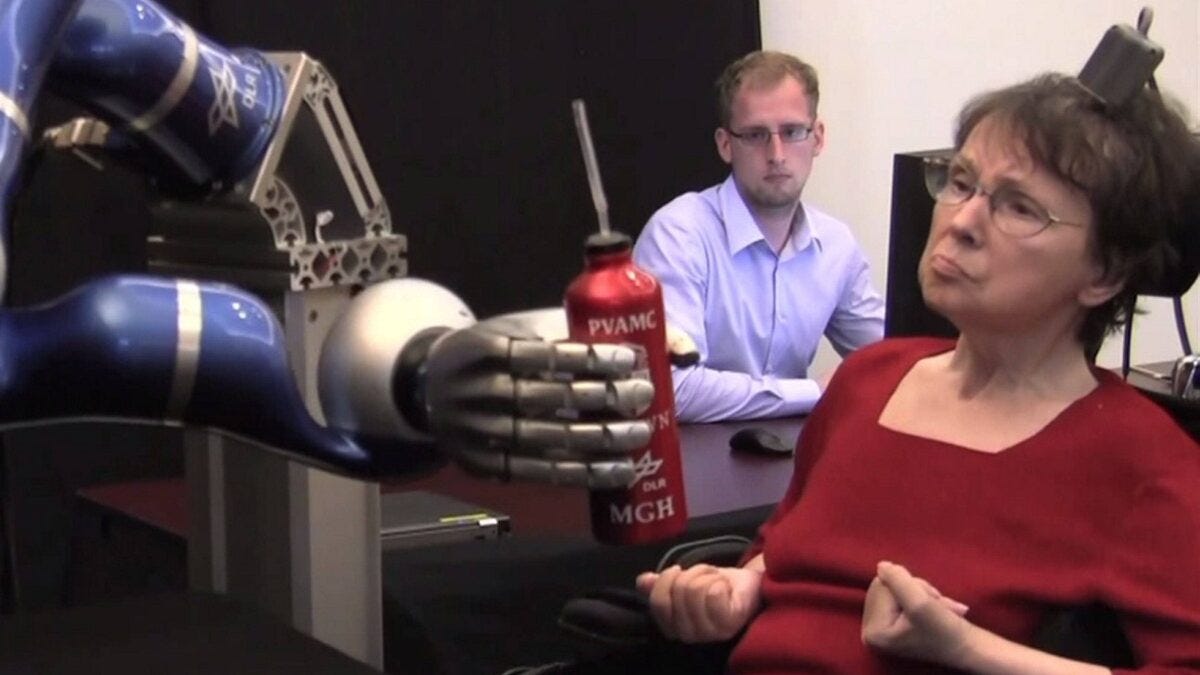
The chapters that describe the path to impact in people’s lives have had a mixed record. John Donoghue describes BCI-based control. First-in-human demonstrations had already been reached through the BrainGate collaboration at that time, but commercialization had not been started. Dozens of people have now been implanted with investigational devices to control cursors, keyboards and keypads. On the one hand, it is a triumph that we have now effectively restored function in paraplegia or dysarthria; on the other hand, only a fraction of a percent of the total addressable population has been treated, and the path to commercialization has been slow despite significant and high-profile investments. I recently participated in a roadmap with PL Neuro describing a smoother path to commercialization. The harsh reality is that translation depends as much on the economics of approvals and reimbursement as on fundamental scientific advances.
More contentious still has been linking genetics to disorders of connectivity that drive neuropsychiatric disorders, explored across different angles in the chapters by Sporns (network) and Mitchell & Fisher (genes). Kevin Mitchell’s exposition of the fundamental problem with neuropsychiatry is astute:
In psychiatry, virtually all diagnoses are like that [i.e., diagnoses of exclusion]. Labels like major depressive disorder or schizophrenia or autistic spectrum disorder are defined by patterns of symptoms that often occur together, with a more or less typical course of illness. These are open constructs—defined not by a strict set of parameters, or the results of a particular test, but by reference to an exemplar. […] They say nothing about causes because the field has known almost nothing about causes. This is the main reason why almost no new drugs, with new mechanisms of action, have been developed for psychiatric conditions in over sixty years.
Indeed, he warns of circular attempts to define biological causes through re-anchoring in the DSM, the standard handbook used by healthcare workers to diagnose mental disorders. The DSM labels are not natural kinds; two patients can receive the same label of major depressive disorder while sharing a single symptom out 9 candidates. What he proposes instead is a gene-centric view: to simplify, that genes cause miswiring, that miswiring causes neuropsychiatric disorders, and that therefore viewing symptoms by grouping by genes or patterns of misconnection is fruitful. Not to pick on Kevin Mitchell’s work—I thoroughly enjoyed his book, Innate—but the gene-and-connectome-centric view has had mixed success. With its emphasis on the biological underpinnings of neuropsychiatric disorders, it has a similar flavor to the RDoC framework championed at the NIMH in the Tom Insel era, which external observers (e.g. Stuart Buck) and Tom Insel himself have heavily criticized.
Many of our conceptual lenses remain recognizable, with one conspicuous omission
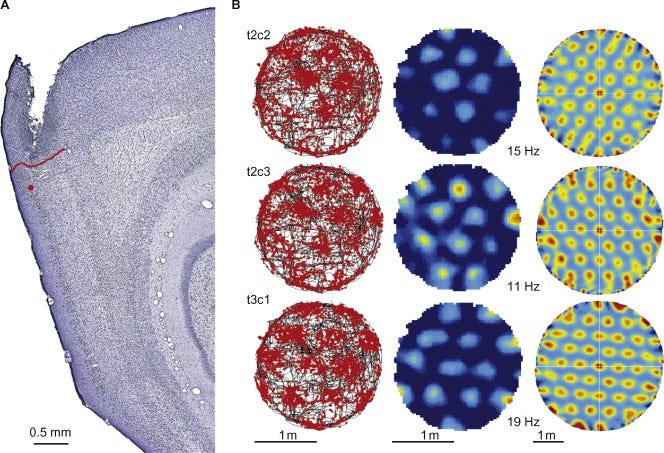
May-Britt Moser and Edvard Moser’s discovery of grid cells was awarded the Nobel Prize in 2014, and their chapter beautifully represents their work. There is something inherently compelling about these cells that fire when an animal moves to a particular location in an arena, in a perfect hexagonal pattern. This is part and parcel of a long line of work documenting striking selectivity properties in particular neurons: Hubel and Wiesel’s simple and complex cells in visual cortex, O’Keefe’s place fields in the hippocampus. In the decade hence, the single-neuron centric view would slowly fade from the spotlight—although remaining very much part of the arsenal—and the neural population view came into fashion.
This is best represented by the late Krishna Shenoy’s chapter. In motor cortex, single cells have mixed selectivity properties: in a task where an animal is moving a joystick, neurons represent seemingly arbitrary combinations of position, velocity, and acceleration of the hand. Maybe the individual neurons don’t matter! One could apply a random rotation to the subspace spanned by the neurons, and get an equivalent system. Krishna presents his vision for dynamical systems analysis, focusing on the manifold of neural activity rather than the activity of any particular neuron.
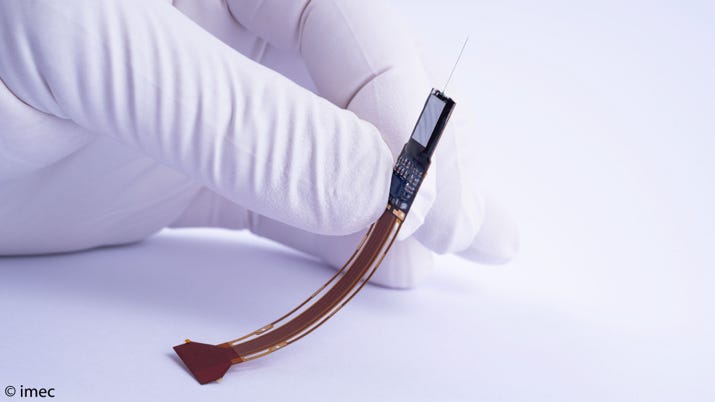
Interestingly, he chose to illustrate his point using a Utah array as the data collection device, the same ones implanted in humans in the BrainGate trial, above; these hard, flat silicon arrays could record at most 96 channels simultaneously and were a big upgrade from the tungsten electrodes and microwires that preceded them. The field would explode, however, with the introduction of Neuropixels in 2017, a rigid linear probe with hundreds, and eventually thousands of contacts, leveraging the same fabrication processes used to create complex integrated circuits. This made it routine to record from hundreds of neurons simultaneously, which helped popularize the population view.
Hence, both the single neuron and population views are described prominently, amongst many other lenses of analyses we would recognize as current: genetic, connectomic/network-based, dynamic. Furthermore, the book presents a vision of how we should perform science—open data represented by the Allen Institute faction, open computational tools as championed by Jeremy Freeman, one of the books’ editors. These were radical at the time, but are increasingly considered normal and expected.
But one viewpoint is clearly missing from the discussion: deep learning.
We are bad at predicting exponential technology
By 2014, deep learning had long been resurrected from its PDP roots by the CIFAR-funded triumvirate of Yann LeCun, Geoffrey Hinton, and Yoshua Bengio. It started to yield remarkable results ranging from image recognition (AlexNet, 2012) to game playing (deep Q-learning, preprinted in 2013). These advances were not unknown to neuroscientists: as a grad student, I was extremely excited to get dinner with Geoff Hinton in early 2013 when he received the 2012 Killam prize; his work was already a very big deal.
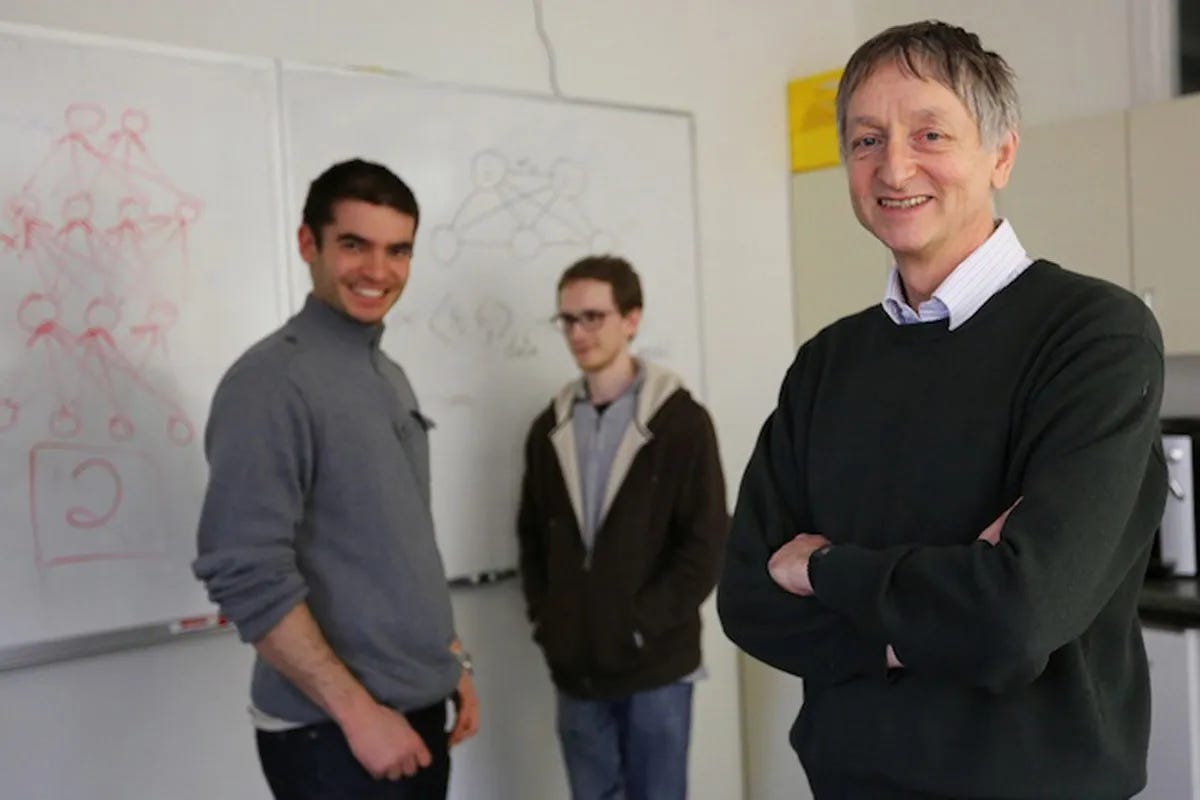
Indeed, Tony Zador briefly touches on the history of the rise of neural nets, the PDP group, the NeurIPS conference, and his PhD work on adding elaborate dendritic trees to artificial neurons. The more prominent reference to deep learning in the book, however, comes from Gary Marcus, of all people. That’s the same Gary Marcus who became (in)famous for his critique of deep learning. Ironically, he has a few nice words to say about deep learning, along with a preemptive defense of neurosymbolic methods:
Hierarchies of feature detectors have now also found practical application, in the modern-day neural networks that I mentioned earlier, in speech recognition and image classification. So-called deep learning, for example, is a successful machine-learning variation on the theme of hierarchical feature detection, using many layers of feature detectors. But just because some of the brain is composed of feature detectors doesn’t mean that all of it is.
Given deep learning and neuroscience’s long entwinement, it could have been foreseen that deep learning was going to be a big deal for neuroscience, as indeed it proved to be in 2014 with papers from Khaligh-Razavi & Kriegeskorte and Yamins & DiCarlo that found a match between deep nets trained for image classification and neurons in the ventral stream. Even Gary Marcus conceded that at least some of the brain, especially those areas involved in perception, could be fruitfully thought of in terms of hierarchical features.
Deep learning left its imprint deeply in neuroscience in the last 12 years. From the early observation of the convergence of representations in visual cortex and networks trained for image classification, the frontier moved from the ventral stream to the dorsal stream to somatosensation, audition and the production of language; entire subfields like NeuroAI, neuroconnectionism, and computational cognitive neuroscience heavily adopted the tools and language of deep learning; we freely borrowed the tools of theoretical deep learning and mechanistic interpretability as a basis for understanding representations; and we heavily deployed tools of deep learning for analysis, from estimating the latents of spiking neurons via LFADS to tracking animal movement through DeepLabCut.
Perhaps it is inevitable that big projects plan around technology scale-ups rather than focusing on (what was then) cutting-edge research. Would the mega-projects of the day have been planned the same or differently if deep learning had come in 2 or 3 years earlier?
What did we learn?
I would say about 80—90% of the book holds up, and it’s a fascinating time capsule. It reminds us that the people making the decisions and allocating the budgets are in the best place to predict the future. We have to carefully think of organizational design; we should encourage new orgs that build things with different incentive structures rather than cramming everything into single PI efforts. While we have learned much, we have not cracked how to fully translate our knowledge into impact for patients.
Tool-based neuroscience has delivered, and modeling without data is dangerous. Despite this, stating that atlases have been a roaring success can feel like a controversial statement: it has become a common refrain that we are swimming in data and that what we need is mechanistic insight. As I’ve pointed out elsewhere, I think the data backlog was a temporary consequence of a supply shock, which will be rapidly eaten away by the democratization of computational methods through code-writing tools. This will leave us in a newly data-starved state, which will be best addressed by more rapidly closing the experiment-analysis loop.
Perhaps the biggest lesson from this exercise is that we need to think very carefully about AI progression. I fear that we are making plans for the future assuming a static world where AI is as good as it will ever be. It’s hard to make predictions about AI given, e.g. the range of predictions on its impact on GDP that range from +0.5% per year (e.g. Acemoglu) to +20% a year (e.g. Korinek). Even more controversial is its diffusion from the world of bits to the world of atoms, with the number of human-equivalent robots manufactured per year by 2036 estimated at ~0 (Rodney Brooks) to ~1 billion (AI 2040).
Consider this as provocation: it’s a good time to imagine positive scenarios for scientific superintelligence; build the datasets today to tackle tomorrow’s questions; and assemble the equivalent of Erdős problems of neuroscience. Lem, the book’s time-travelling whisperer, reminds the audience that “living systems [are] characterized by large numbers of highly heterogeneous components” and that, even in 2064, “no single human understands how the brain works at anything but an abstract and highly simplified level” because “nervous systems interdigitate practically everything”.
The “no single human” framing leaves open other possibilities for understanding: that groups of people may understand the brain; that groups of people together with AI may understand the brain; or that a superintelligent AI may organize more facts than is practical for any human to understand into a taxonomy and a theory comprehensible by a single human, much as I learned general relativity in undergrad, but I couldn’t have derived it ex nihilo. The solution to the complexity of the brain is not to give up, but to articulate a vision for neuroscience unshackled from the limits of human cognition.
Aphorism attributed to Alan Kay (1971)
This was a great retrospective, and scoring the 2014 predictions against what actually shipped is the kind of accountability the field almost never does to itself.
The pattern that jumps out of your own scorecard is that the wins were all measurement bets, atlases, expansion microscopy, connectomics, while the big miss, the Human Brain Project, was a simulation bet placed before the data existed to constrain it. It reads less like good calls versus bad calls and more like a rule: tools that generate data at scale beat models that run ahead of it.
This is core to the work we're doing at JOPRO and I salute efforts to highlight this: "We have to carefully think of organizational design; we should encourage new orgs that build things with different incentive structures rather than cramming everything into single PI efforts." - We've put some people in impossible situations, and there is a broader space for opportunity to make new things than is realized; it is against the currents, but the opportunities are there. So how do we support people in doing so? I'd love to connect with anyone efforting towards such.
The whole paragraph, even, is worth repeating:
"I would say about 80—90% of the book holds up, and it’s a fascinating time capsule. It reminds us that the people making the decisions and allocating the budgets are in the best place to predict the future. We have to carefully think of organizational design; we should encourage new orgs that build things with different incentive structures rather than cramming everything into single PI efforts. While we have learned much, we have not cracked how to fully translate our knowledge into impact for patients."